

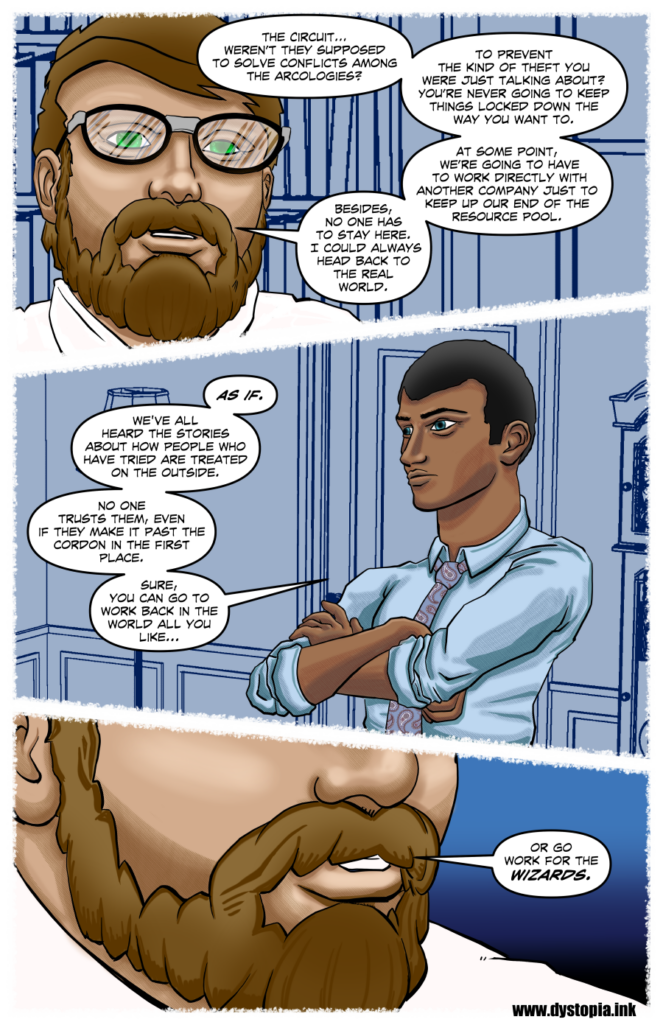
This week’s page lingered with me after I finished drawing it, largely because of the dialogue. Ventrik references “The Circuit”, "Life on the outside", and "The Wizards". Each of these pieces of dialogue feel simple on the surface but open a lot of doors if you stop and sit with them for a moment. Jackwraith doesn't explain the Circuit or who the Wizards are, and that’s very much on purpose. As a reader, you’re meant to encounter it the way the characters do… Something assumed, established, and already embedded in the world. What the Circuit is, how it works, and who it really serves are questions you’ll have to wrestle with and come to your own conclusions as the story unfolds. That approach is something I’ve enjoyed in William Gibson’s writing: these big ideas and systems are introduced with enough detail to feel real, then left open for the reader to fill in the gaps.
From an artistic standpoint, this kind of dialogue shapes the process. Ventrik isn’t explaining or justifying himself; he’s speaking from a place of certainty concerning the realities of the system. My job on the page was to let that confidence exist visually without underlining it too heavily… keeping his expression controlled, his posture relaxed, and letting the weight of the words do the work. Jackwraith’s scripts often provide moments where the world expands sideways instead of forward, and translating that into panels is a great deal of fun. Scylla continues to pose larger questions without answering them outright, and I’m excited to see how you interpret those ideas as we move deeper into the chapter.